
Summary
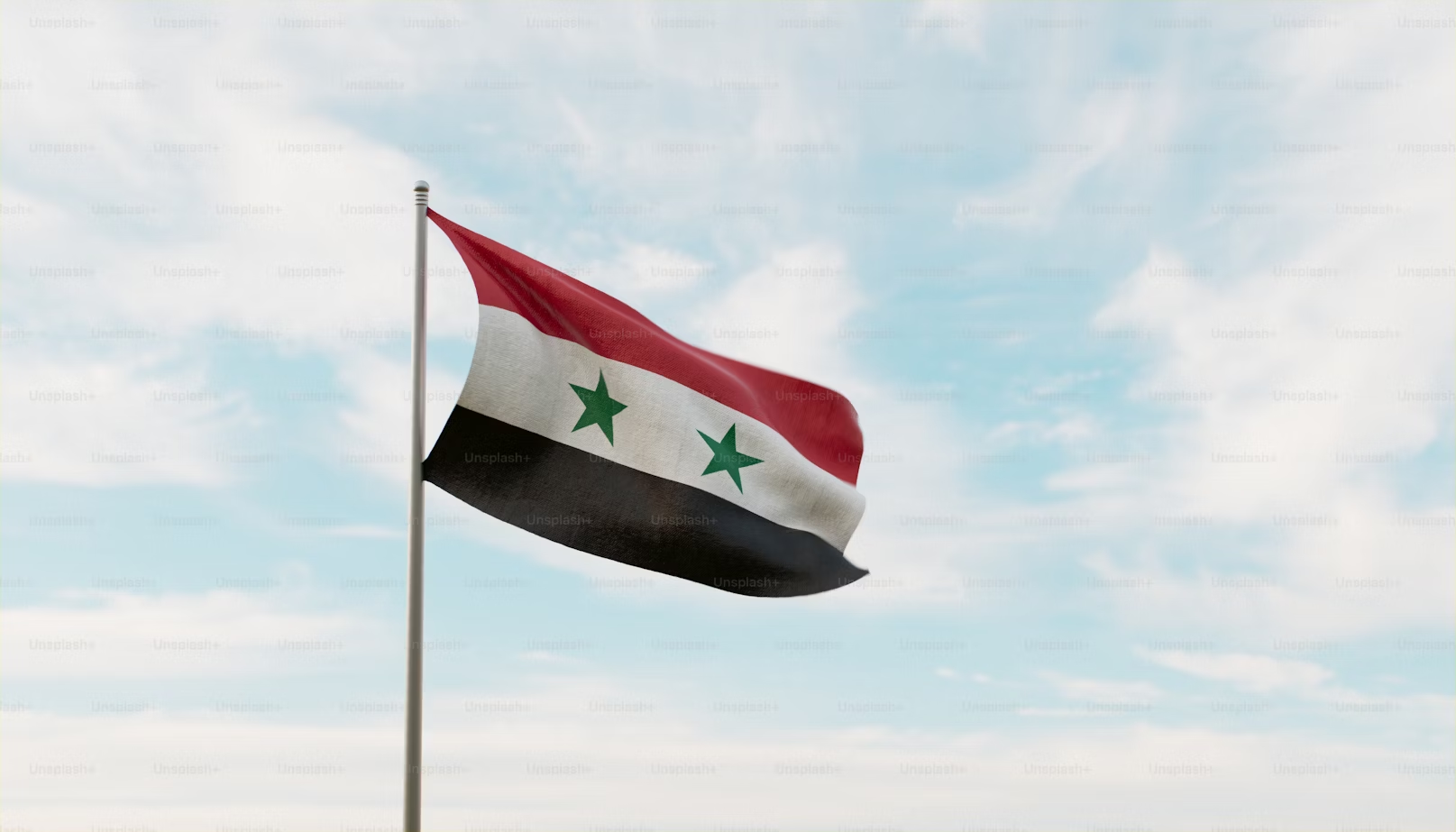
Syrian rebels have captured Damascus, forcing dictator Bashar Al-Assad to flee to Russia.
Syria’s dictator, Bashar Al-Assad, has fled Syria when rebels took Syria’s capital Damascus.
This brings his twenty-four-year rule to an end.
The recent capture of major cities was lead by the Turkish-backed Islamist militant group, Hayat Tahir al-Sham, (HTS).
The resurgence of conflict began two days ago when rebels captured the southern region of Deraa and strategically-valuable cities across the country.
Al-Assad has since taken refuge in Moscow. Russia is an ally of Al-Assad and his regime, and his provided military aid and assistance to his forces during the war.
The Al-Assad family first took control of Syria in 1971 when Hafez Al-Assad became president. The family has ruled since then With the Ba’ath party. A nationalist and secularist party.
Since then, rebels have freed prisoners, toppled statues of Al-Assad and civilians are cheering in the streets.
HTS’ leader, Abu Mohammed al-Jolani made a speech to an audience of civilians in Damascus.
In Hama, over a million people have gathered in the streets in celebration. With Syrians entering presidential residences and buildings to take selfies.
How did the war in Syria start?
It started with a child graffitiing a wall in 2011.
Syrians were angry with the high levels of unemployment, corruption and nepotism in the country.
The peaceful protests of the Arab Spring in Egypt and Tunisia inspired the people of Syria to protest their own government.
In Daraa, southern Syria, Mouawiya Syasneh, a fourteen-year-old sprayed: “It’s your time, Doctor” on a wall. Al-Asaad had medical training.
Soon after, the boy and his friends were detained by the secret police, (Mukhabarat) for twenty-six days. The families of the boys protested for their release, and police used tear gas and live ammunition. When they were released, the people of Daraa were furious. The boys were allegedly tortured by the police.
Then, on March 15th 2011, came the “Day of Rage” where Syrians called to overthrow Al-Assad’s government.
Police and military forces used violence against the protestors, detaining and torturing many dissidents.
This violence escalated into a civil war, with government forces fighting rebels. From the Syrian Arab Republic to the Syrian opposition to the Kurdish Syrian Democratic Forces. Turkey, Russia and Iran have backed different factions in the conflict. Iran had given troops and financial support to the Syrian government.
What does this mean for Syria?
Syrian rebels are declaring victory over Al-Assad’s regime and are celebrating Syria’s new-found freedom, with the Syrian army declaring his rule over.
The new leaders of Syria will need to bring order to the country after years of war.
This sudden change within the region may also lead Syrian refugees living in camps in neighbouring countries to be able to return home.
Russia has granted Al-Assad asylum for “humanitarian” reasons, according to Russian State Media.
Some news organisations are calling this loss a blow to Russia’s reputation.
Other factions within the conflict, such as Israel, are anticipating the future of the region.
President Joe Biden calls Al-Assad’s exit a “historic opportunity”.
Featured Image Credit: Unsplash

Third year journalism student. 2025/2026 Lifestyle and Comment Editor at Brig. Published in The Yucatán Times, Mi Campeche and The Mourning Paper. Host of From the 40s with Air3Radio.


