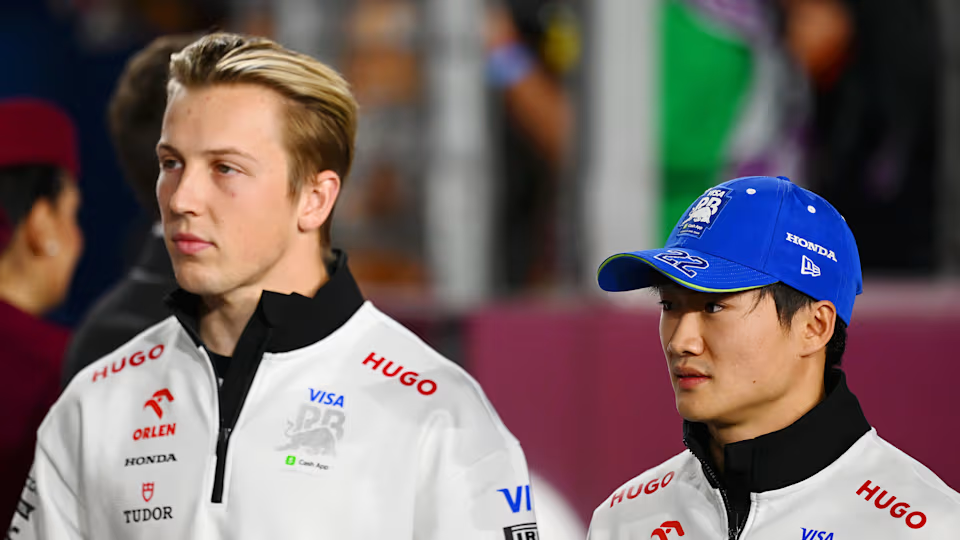

The Formula 1 community has been shocked by the recent Liam Lawson Swap by Red Bull Racing to replace him as Max Verstappen’s teammate with Yuki Tsunoda, for the upcoming Japanese Grand Prix. This move comes just two races into the season and raises questions about the team’s approach to developing talent and their expectations for immediate performance.
Liam Lawson’s promotion to the senior Red Bull team initially highlighted his potential, but he struggled to deliver strong results. He qualified 18th and failed to finish in Australia, then placed 20th in qualifying and finished 12th in China. However, such performances are typical for a rookie adjusting to a top-tier team.
However, Yuki Tsunoda’s excellent performance with the Racing Bulls demonstrated his readiness for a more important position. He was a natural choice for promotion because of his knowledge of Red Bull’s environment and his consistent growth. However, there are issues with this driver swap’s timing and execution.
Red Bull has a history of making rash decisions about its second drivers. Alongside Verstappen, Pierre Gasly and Alex Albon had brief stints and both failed to live up to the high standards of the team. In addition to upsetting the relationships within the team, this revolving door approach puts tremendous pressure on drivers to produce results right away, frequently at the expense of their growth and confidence.
This choice demonstrates Red Bull’s high-performance culture, which places emphasis on immediate results. Jaime Alguersuari, a former Red Bull junior driver, sympathized with Lawson and emphasized that it takes time to get used to a new team and vehicle. He pointed out that Lawson’s difficulties reflected the difficulties of Formula One rather than his skill.

Lawson was notified about this demotion through social media, which I believe is an incredibly poor decision for the team and one that reflects poorly on its management. The manner in which this news was delivered raises concerns about professionalism and communication within the organization. Some current grid members, such as Max Verstappen, have openly expressed their opposition to the change, with Verstappen even engaging with social media posts that criticized the decision
Additionally, this action highlights a larger problem with Red Bull’s management style. The team’s seeming obsession with short-term success ignores the long-term advantages of developing talent. This also puts tremendous pressure on drivers coming up through formula two under the Redbull junior team drivers as performance is the only thing that seems to matter, and fears of demotion could push them to other teams.
The difficult task of performing under the close scrutiny that comes with being Verstappen’s teammate awaits Yuki Tsunoda as he starts his new position. The pressure to perform could be too much, even though his recent performance and past experience indicate he is capable of handling the task.
In the end, while Red Bull is always under pressure to perform and make smart strategic moves, there’s a fine line between strong leadership and rash decisions. To support their drivers’ growth and ensure long-term success, they may need to focus more on patience and stability rather than quick changes.
To Learn More about formula one: Read
Featured Image Credit: formula one