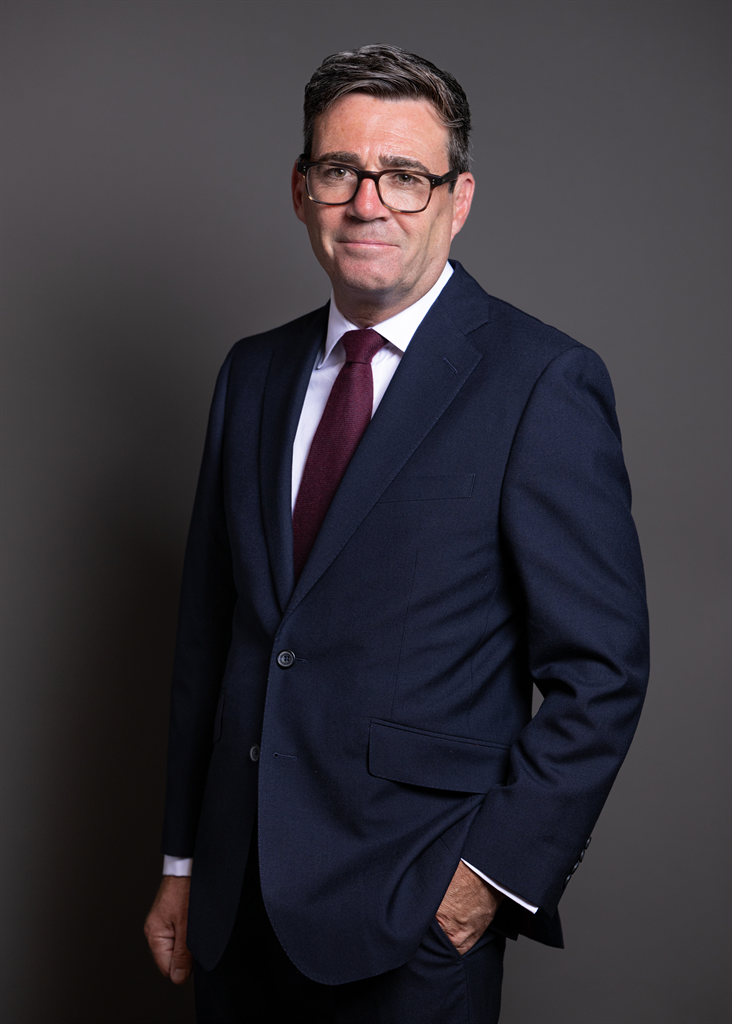

When Andy Burnham told the Labour party conference that Brexit had “done more harm than good”, he wanted the British public to realise, here, finally, was a man of sincerity.
Indeed, Burnham’s leadership has seen Labour boosted in the polls; some have called it the “Burnham Bounce.”
But does he mean what he says? And what does it mean for Scotland?
The Impact on Scottish Farmers
Burnham told MPs last week that the “UK’s largest food export, Scottish Salmon, faces a 100 percent rate of document checks at the border, costing us around £100 million in lost exports.” And analysis from the National Union of Farmers released on Friday showed that food and drink exports to the EU have dropped by more than a third since Brexit. The EU is the largest market for the export of British agri-food products.
The Labour government was elected in 2024 on a manifesto which pledged to create an agri-food agreement with the EU. After Brexit, there was a 21 percent drop in agri-food exports and a 7 percent drop in imports from the EU.
After a deal was reached last year, paperwork and physical checks on dairy products, eggs, fish and fresh red meat will no longer be needed from mid 2027. Since Brexit, every consignment for EU export has required a health certificate, which costs up to £200, along with other paperwork.
Scottish seed potatoes, used to grow the kind we eat, are reputable for their disease resistance, but since Brexit producers have been unable to export them due to a breakdown in talks in 2020. Pre-Brexit, £11 million worth of Scottish seed potatoes were exported to the EU each year.
Scottish farmers will be hoping for progress at EU talks next month, but making a deal could be complex because it would involve Scottish farmers aligning with EU rules.
More opportunities for young people
In April, it was announced that the UK would rejoin the EU’s Erasmus+ scheme from 2027. The scheme, which funds education and training opportunities, allowing students, apprentices and school groups to spend time in another participating country, was replaced by Turing funding in 2021.
The EU are keen on establishing a youth mobility agreement with the UK, which would allow young British citizens to study and work for a period in the EU and EU citizens to do the same here. A youth mobility scheme visa is already available to young people from 12 countries, including Japan, Australia and Canada.
A deal was expected to be finalised at the end of spring, but the UK’s wish for a yearly cap on the number of EU citizens benefitting from the scheme has stalled talks. Current caps have allowed Westminster, taking account of the number of British citizens participating in other countries’ youth mobility schemes, to assure a negative net migration figure. The EU wanted unlimited participation but proposed an “emergency pause” clause as part of the deal.
It is hard to imagine that Burnham, given the threat of Reform and perceived public perceptions towards immigration, will be any less cautious in negotiating a scheme.
However, the PM recently acknowledged in the Rest is Politics podcast that “public opinion has moved more quickly than the political opinion.” Here in Scotland, where 62 percent voted to remain in the EU, it could be said that public opinion was never in favour of the current situation in the first place.
Today, in Motherwell, Burnham repeated his intention to not be the last prime minister of the UK. Forging closer ties with the EU, especially in relation to farming, would surely increase the chances of that wish coming true.
As part of any deal, the UK will have to compromise, and it may well get to the point where membership is put back on the table as an alternative to countless tedious summits. Burnham hasn’t ruled it out.
Featured Image Credit: Andy Burnham/House of Commons


