

The Students’ Union comes under fire after Freshers’ Week events fail to efficiently meet the needs of disabled and neurodivergent students.
Freshers’ ran over two weeks but not all students got the “welcome back” they had hoped for, with problems ranging from the ticket process to the events themselves.
Brig spoke to Lewis Shaw, Equalities Officer and Sonny Bailey, Disabled Students Association of Stirling (DSAS) Chair about these issues.
The Students’ Union were also given the opportunity to respond to these concerns.
Tickets: a long-standing problem
The queuing system for tickets and lack of an online booking alternative failed to accommodate the needs of students and of those who did wait, some did not even receive tickets.
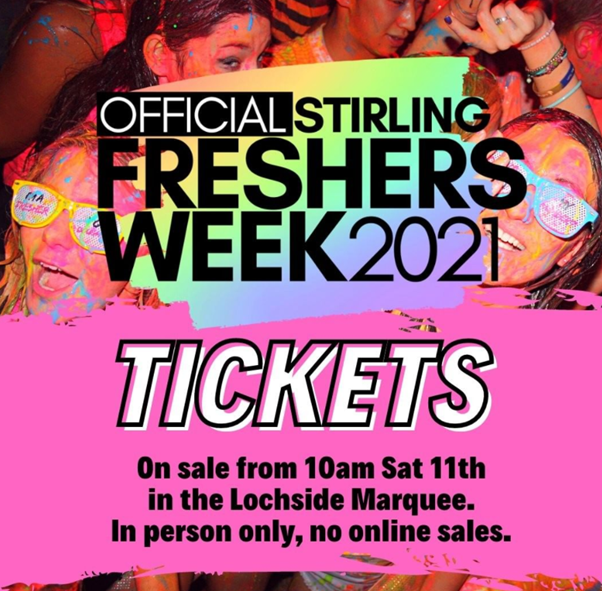
Lewis Shaw reported having had “a number of complaints from students in general who were standing for hours and not getting a ticket.”
Additionally, disabled students who could not queue were disadvantaged from buying tickets, unless they had somebody to purchase them on their behalf.
The union acknowledged “not everything went as expected with ticketing” and that they are “truly sorry” for this.
Despite this apology afterwards, the poor planning meant that some disabled students were excluded from events as they could not purchase tickets.
This contradicted the Students’ Union Equality, Diversity and Inclusion Policy (https://www.stirlingstudentsunion.com/aboutus/equalitydiversityinclusion/) that states the union will:
“Consider whether they place disabled people at a substantial disadvantage.”
Venue: a signposting issue
A number of night-time events were offered at Venue but from a public perspective there were some accessibility concerns.
The union highlight there was a “small, seated rest area” at club-themed events such as Wheel of Tunes.
As well as this, the one-way system implemented because of Covid-19 restrictions meant there was a separate entrance via Studio for disabled students.
The only available accessible toilet was “at the end of Underground, which was open at all events”, explained the union.
However, many students seemed unaware of these measures. This suggests that this was not communicated effectively to students.
“I didn’t expect it to be perfect but the lack of communication is the biggest concern for me.”
Lewis Shaw, Disability Officer
Sonny Bailey agreed with this.
Bailey said: “There was a communication problem. What’s important for neurodivergent and disabled students is predictability.”
A lack of information on accessibility and accommodation within events could prevent disabled and neurodivergent students from attending, as they couldn’t ensure their needs would be met.
The Students’ Union said: “In future, we can look to signpost this further at any evening events in the same nature.”
There were two fully seated events offered: the comedy night and drag bingo, with a good attendance. As well as this, there was the Virtual Freshers’ Fayre for those who could not attend campus.
The quiet hour and the silent disco: were students’ needs heard?
Freshers’ Week took steps towards a more neurodivergent friendly approach.
A quiet hour was in place at the Lochside Marquee 10am-11am every day, an initiative initially introduced by Sonny Bailey during his time as Disability Officer.
The union described the quiet hour: “During this time no music was played, stallholders were asked to keep talking volumes low and no shouting.”
However, with no sabbatical officers being involved in the activity planning, the representative input of Lewis Shaw as Disability Officer and Sonny Bailey as DSAS Officer was evidently lacking.
Both highlighted a lack of available information of what the quiet hour entailed.
“My question is why was the quiet hour not promoted more? I support having it 100% but why was it not advertised better?” asked Lewis Shaw.
Sonny Bailey was concerned that “there were balloons that could pop at any time, causing problems with overload.”
This was a precaution that could have been easily remedied had there been better disability representation when organising Freshers’ Week 2021.
The union did offer a Silent Disco which was a no alcohol, early-evening event.

A Union representative said: “This event was low volume, low capacity in a large space and allowed students who didn’t want to engage with evening nightclubs to attend a social event. We worked with the University to ensure that the marquee was physically accessible via ramps,”.
While a successful event, there were some concerns that it invertedly excluded disabled and neurodivergent students who also consume alcohol.
Rather than making all events more accessible, the union offered one event “suitable” for the needs of neurodivergent and disabled students without consulting them directly.
““You’re not getting the full experience of freshers. It felt like a covering their back situation.”
Sonny Bailey, DSAS Officer
Communication post-pandemic
The accessibility concerns raised from Freshers has suggested a communication problem between the Students’ Union, University of Stirling, and students.
“From a neurodivergent standpoint, I didn’t feel I could go to any night-time events,” Sonny Bailey admitted.
Lewis Shaw expressed concerns of “disabled students going to events and getting left out”.
While there were successes such as the Silent Disco and evidence suggesting an attempt towards accessibility, there seems to have been a barrier between what disabled and neurodivergent students are thought to need and what they’re actually asking for.
Link to Freshers’ Survey: https://docs.google.com/forms/d/e/1FAIpQLSfj0ZEQHP7mqqajxMMbSMB2Q6LO6hU6sYQnx9tkj6yQjioI2Q/viewform
Featured image credit: Students Union Instagram page.

20 year old queer poet and journalist 😎


