

Britain’s favourite bear has returned with another nutty adventure: Paddington in Peru. Armed with marmalade, beautiful manners and his wonderous ability to cause joyous chaos, Paddington is back and delivering a fact he wishes to remind everyone of: Paddington is an immigrant.
Paddington has been embroiled in political culture for the last several years. From the death of Queen Elizabeth II to the death of several other prominent British figures, Paddington has become a symbol of Britishness that isn’t always positive. Online culture has weaponised the bear, turning him into a symbol of British purity.
Paddington in Peru reminds audiences what values and traits actually define Britishness. A little clue: it’s more than your accent.
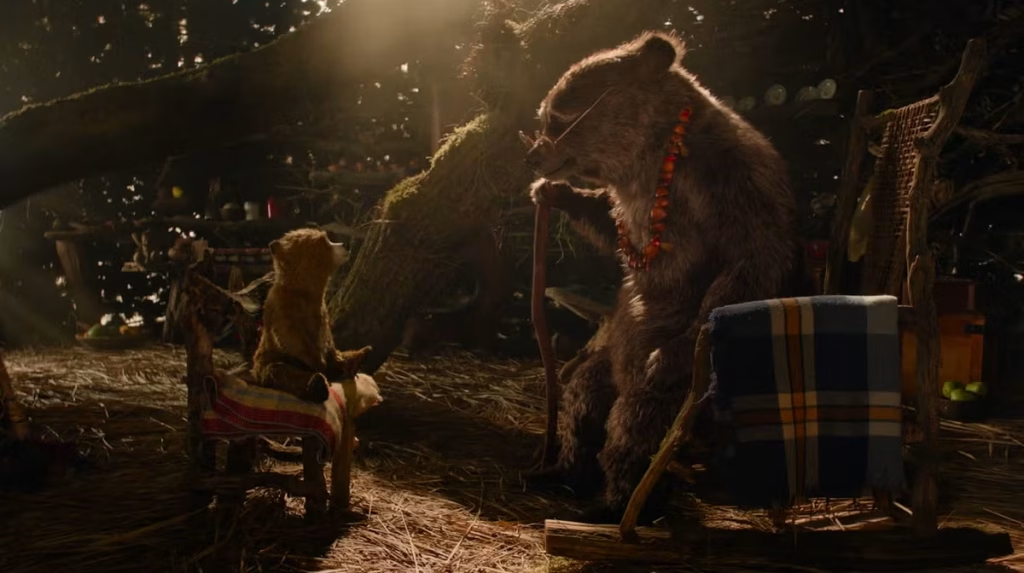
To deliver its sentiment, Paddington in Peru shows the importance of kindness, family and connection. Through Paddington, Aunt Lucy, the Browns and all the new characters, Paddington makes sure to emphasise bravery, empathy and the irreplaceable treasure of love- and why love must be prioritised. The film is a whirlwind of laughs, sweetness and joy from start to finish. It’s family friendly- as in fun for kids and adults alike- with some surprisingly sharp witty jokes. It deserves to sit amongst the other films in the Paddington trilogy as the benchmark for children’s films.
As always, the Brown family have the whimsy and eccentricism that audiences have come to know and love. Also as always, Hugh Bonneville takes the marmalade cake with his performance as the risk-averse father, Mr. Brown.
However, a new character featured in Paddington in Peru who not only stole the show, but who also clearly had the absoloute time of her life being involved. In a similar vein to Hugh Grant, who told Variety Paddington 2 is the best film he’s ever been in, Olivia Colman’s presence in Paddington in Peru was stellar and she clearly excelled in the whacky world of Paddington. Playing the Reverend Mother, Colman had a blast with the bears whilst living out her Sound of Music fantasy. Her presence moved the film from near-perfect to perfect.

The story itself is a classic Paddington problem where everything can be solved by the power of love and family. It shows the greed of humans, the kindness of humans and the importance of having good manners. However, the magic of the internationally, generationally and critically acclaimed Paddington 2 was not present. Director Paul King was not involved in Paddington in Peru- his absence is felt. However, Dougal Wilson did a more than great job at directing Paddington in Peru. Even if King was involved in the third film, it’s unlikely the quality of Paddington 2 could be reached again. There’s lots of Renaissance art, but only one Sistine Chapel ceiling.
Ultimately, despite its minuscule shortcomings, Paddington in Peru is a perfect example of why the moral nature of films is essential. Kids and adults alike pay attention to movies, and are influenced by the characters they love. Paddington in Peru, as do the other Paddingtons, shows the importance of niceness. And, with more clarity than ever, the third Paddington shows the meaning of what is to be British.
Yes, Paddington is the quintessential British gentlebear. Yes, he’s from Peru. Britishness is not defined by the soil you’re born on. To be British, is to be like Paddington- and that’s not an invitation to cover yourself in marmalade.
Feature image credit: Studio Canal

Editor-in-Chief.
Twitter/X and BlueSky: @AlexPaterson01
